01Technology confidence
“I wanted to video-call my family without asking for help every time.”
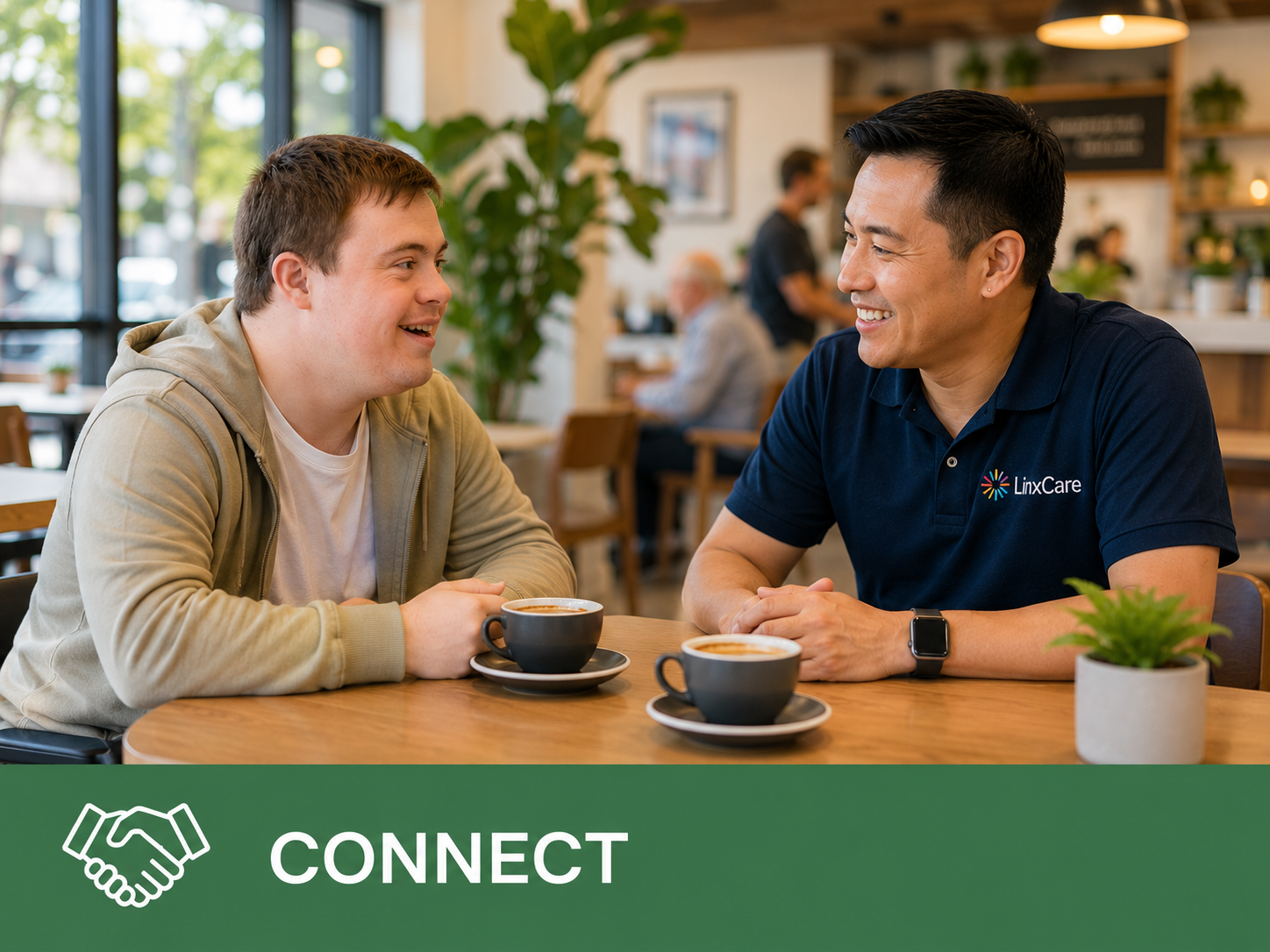
David and his mentor still enjoy their usual coffee and conversations during weekly social support. One afternoon, they used some of that time to practise making a video call. His mentor showed him one step at a time, then let David take the lead. Now he can start the call himself and stay connected on his own terms.
02Everyday life skills
“I wanted to cook one of my favourite meals by myself.”
Mia and her mentor often go shopping and spend time together at home. This time, they turned an everyday support session into a chance to build a skill. They planned the meal, shopped within a budget and cooked side by side. With practice, Mia became ready to make it again with less support.
03Community participation
“I wanted to meet people, but going somewhere new made me nervous.”
At first, Noah’s mentor accompanied him to a local community group so he would not have to walk in alone. They explored the activity together and practised simple ways to start a conversation. Over time, his mentor stepped back. The group became somewhere Noah knew people—not simply somewhere he attended.
04Employment pathways
“I wanted a job, but I didn’t know where to begin.”
During their regular outings, Priya told her mentor that she wanted to work one day but lacked confidence. They began using part of their time together to recognise her strengths, explore realistic roles and practise introducing herself. Her first step was not a job offer—it was feeling confident enough to apply for a volunteer role.
These stories are illustrative examples. Every mentoring relationship is shaped around the individual.